The tariff lie

Stalin

Well-Known Member
Joined
Apr 4, 2008
Messages
3,954
Anyone expecting anything less than a litany of lies from the hapless frump and his lickspittles is fooling themselves as this
article shows...

"... A central plank of the Trump administration’s economic policy agenda has been the imposition of sweeping tariffs against friend and foe alike, especially after the unveiling of the all-embracing “reciprocal tariffs” on April 2.

According to Trump, his officials and acolytes, the revenue they bring will reduce the US budget deficit, its record debt, fund tax cuts for the corporations and the wealthy, create jobs and lift wages and in general create the conditions for a new “golden age” for American capitalism.

Trump has continually boasted of the hundreds of billions of dollars flowing into the coffers of the US, reversing the previous situation in which it has been “ripped off” by the rest of the world.

But in the Supreme Court on Wednesday, Solicitor General D. John Sauer, representing the administration, was singing a very different tune. The occasion was the appeal by the Trump regime to the court to have rulings by two lower courts that the reciprocal tariffs, imposed or threatened by Trump under the International Emergency Economic Powers Act (IEEPA) of 1977, are illegal.

Sauer submitted that revenue raising was not the primary purpose of the tariffs.

“These are regulatory tariffs. They are not revenue-raising tariffs. The fact that they raise revenue is only incidental. The tariffs would be most effective so to speak if, if no person ever paid them,” he said.

The reason for the switch was an attempt to get round the legal argument that Trump exceeded his powers to act under the IEEPA because it makes no mention of tariffs or any of the synonyms such as duties, taxes or imposts.

The thrust of Sauer’s argument was that the reciprocal tariffs were not about revenue but were part of the conduct of foreign policy and therefore fell under the president’s authority.

“If the threat of imposing those tariffs gets China and our other trading partners across the world to change their behaviours in a way that addresses this, then that’s the most effective use of this policy,” he said.

The switch of argument by Sauer during hearing—in its initial submission the administration said if it were forced to repay the tariffs it would cause economic devastation—is another example of the capacity of the Trump regime to argue black is white today and the reverse tomorrow.

But there was an element of truth in Sauer’s remarks.

The issue is not the revenue the tariffs produce but the way they can be used to achieve foreign policy objectives, above all in the economic war against China. This involves not only measures aimed directly against Beijing, but also at breaking the economic and trade ties that a multitude of countries have with China, particularly in Southeast Asia.


comrade stalin
moscow
 
Werbung:
Anyone expecting anything less than a litany of lies from the hapless frump and his lickspittles is fooling themselves as this
article shows...

"... A central plank of the Trump administration’s economic policy agenda has been the imposition of sweeping tariffs against friend and foe alike, especially after the unveiling of the all-embracing “reciprocal tariffs” on April 2.

According to Trump, his officials and acolytes, the revenue they bring will reduce the US budget deficit, its record debt, fund tax cuts for the corporations and the wealthy, create jobs and lift wages and in general create the conditions for a new “golden age” for American capitalism.

Trump has continually boasted of the hundreds of billions of dollars flowing into the coffers of the US, reversing the previous situation in which it has been “ripped off” by the rest of the world.

But in the Supreme Court on Wednesday, Solicitor General D. John Sauer, representing the administration, was singing a very different tune. The occasion was the appeal by the Trump regime to the court to have rulings by two lower courts that the reciprocal tariffs, imposed or threatened by Trump under the International Emergency Economic Powers Act (IEEPA) of 1977, are illegal.

Sauer submitted that revenue raising was not the primary purpose of the tariffs.

“These are regulatory tariffs. They are not revenue-raising tariffs. The fact that they raise revenue is only incidental. The tariffs would be most effective so to speak if, if no person ever paid them,” he said.

The reason for the switch was an attempt to get round the legal argument that Trump exceeded his powers to act under the IEEPA because it makes no mention of tariffs or any of the synonyms such as duties, taxes or imposts.

The thrust of Sauer’s argument was that the reciprocal tariffs were not about revenue but were part of the conduct of foreign policy and therefore fell under the president’s authority.

“If the threat of imposing those tariffs gets China and our other trading partners across the world to change their behaviours in a way that addresses this, then that’s the most effective use of this policy,” he said.

The switch of argument by Sauer during hearing—in its initial submission the administration said if it were forced to repay the tariffs it would cause economic devastation—is another example of the capacity of the Trump regime to argue black is white today and the reverse tomorrow.

But there was an element of truth in Sauer’s remarks.

The issue is not the revenue the tariffs produce but the way they can be used to achieve foreign policy objectives, above all in the economic war against China. This involves not only measures aimed directly against Beijing, but also at breaking the economic and trade ties that a multitude of countries have with China, particularly in Southeast Asia.


comrade stalin
moscow
Trump has a far better understanding of international finances and American security than any democrat who ever opened his mouth on the subject over the last 4 decades.
 
There are healthcare, education and food for those that capitalism for those that cannot feed in many other countries that do not choose to reward billionaires and fight absurd unwinnable wars all over the planet. Except for the billionaires, we will all be better off if we see to it that adequate food, shelter, healthcare and education are available to ALL citizens.
 
There are healthcare, education and food for those that capitalism for those that cannot feed in many other countries that do not choose to reward billionaires and fight absurd unwinnable wars all over the planet. Except for the billionaires, we will all be better off if we see to it that adequate food, shelter, healthcare and education are available to ALL citizens.
Nothing is free. If leftists gain support by taking money from some to buy support from others those leftists are thieves and robbers and bad for civilization.
 
What do democrats know about international trade balances if they still do not know that there is no such thing as free healthcare, free college tuition, free food, free bus rides, and so forth?

oh really

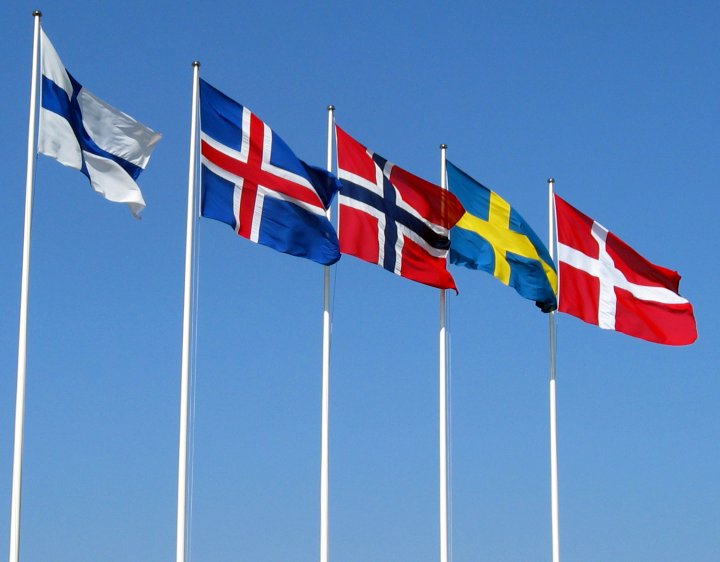
do yourself, and fellow members, a big favour by going on a fact-finding tour of scandinavia

and by the way, no us president has supported high tariffs since herbert hoover ( another dumb republican ) used them to create the great depression

Finland became the first country in Europe to grant universal suffrage in 1906, and the first in the world to give all adult citizens the right to run for public office. Finland remained a largely rural and agrarian country until the 1950s, when it pursued rapid industrialisation and a Nordic-style welfare state, resulting in an advanced economy and high per capita income. The country consistently ranks highly in international rankings across various categories, such as education, economic competitiveness, happiness, and prosperity. Finnish foreign policy based on its middle power status emphasizes international cooperation and partnership, which has recently shifted towards closer ties with NATO. Finnish cultural values, including egalitarianism, secularism, human rights and environmentalism, are actively promoted through membership in multiple international forums.

..

All the Nordic countries are however described as being highly democratic and all have a unicameral legislature and use proportional representation in their electoral systems. They all support a free market and universalist welfare state aimed specifically at enhancing individual autonomy and promoting social mobility, with a sizable percentage of the population employed by the public sector (roughly 30% of the work force in areas such as healthcare, education, and government), and a corporatist system with a high percentage of the workforce unionized and involving a tripartite arrangement, where representatives of labour and employers negotiate wages and labour market policy is mediated by the government. As of 2020, all of the Nordic countries rank highly on the inequality-adjusted HDI and the Global Peace Index as well as being ranked in the top 10 on the World Happiness Report.

The Nordic model was originally developed in the 1930s under the leadership of social democrats, although centrist and right-wing political parties, as well as labour unions, also contributed to the Nordic model's development. The Nordic model began to gain attention after World War II and has transformed in some ways over the last few decades, including increased deregulation and expanding privatization of public services. However, it is still distinguished from other models by the strong emphasis on public services and social investment.


comrade stalin
moscow
 
more ...

eat this...

The Nordic model has been characterized as follows:


  • An elaborate social safety net, in addition to public services such as free education and universal healthcare in a largely tax-funded system.
  • Strong property rights, contract enforcement and overall ease of doing business.
  • Public pension plans.
  • High levels of democracy as seen in the Freedom in the World survey and Democracy Index.
  • Free trade combined with collective risk sharing (welfare social programmes and labour market institutions) which has provided a form of protection against the risks associated with economic openness.
  • Little product market regulation. Nordic countries rank very high in product market freedom according to OECD rankings.
  • Low levels of corruption. In Transparency International's 2022 Corruption Perceptions Index, Denmark, Finland, Norway and Sweden were ranked among the top 10 least corrupt of the 180 countries evaluated.
  • A partnership between employers, trade unions and the government, whereby these social partners negotiate the terms to regulating the workplace amongst themselves, rather than the terms being imposed by law. Sweden has decentralised wage co-ordination while Finland is ranked the least flexible. The changing economic conditions have given rise to fear among workers as well as resistance by trade unions in regards to reforms.
  • High trade union density and collective bargaining coverage. In 2019, trade union density was 90.7% in Iceland, 67.0% in Denmark, 65.2% in Sweden, 58.8% in Finland, and 50.4% in Norway; in comparison, trade union density was 16.3% in Germany and 9.9% in the United States.Additionally, in 2018, collective bargaining coverage was 90% in Iceland, 88.8% in Finland (2017), 88% in Sweden, 82% in Denmark, and 69% in Norway; in comparison collective bargaining coverage was 54% in Germany and 11.7% in the United States. The lower union density in Norway is mainly explained by the absence of a Ghent system since 1938. In contrast, Denmark, Finland and Sweden all have union-run unemployment funds. Union density has declined in Denmark, Finland and Sweden, but is relatively stable, although at a lower level (about 50%), in the non-Ghent Norway.
  • The Nordic countries received the highest ranking for protecting workers rights on the International Trade Union Confederation 2014 Global Rights Index, with Denmark being the only nation to receive a perfect score.
  • Significant public spending, with Norway at 48.3% of GDP, Sweden at 49.4%, Iceland at 49.8%, Denmark at 50.8% and Finland at 55.8%. This is high even compared to the OECD average of 46.3%.
  • Overall tax burdens as a percentage of GDP are high, with 35.9%, 41.4%, 41.4%, 42.4% and 43.4% for Iceland, Norway, Sweden, Finland and Denmark respectively. This is compared to the OECD average of 33.9%.The Nordic countries also have a relatively progressive taxation system in place; this along with their generous welfare systems have made them among the least unequal countries in the world.
  • The United Nations World Happiness Reports show that the happiest nations are concentrated in Northern Europe. The Nordics ranked highest on the metrics of real GDP per capita, healthy life expectancy, having someone to count on, perceived freedom to make life choices, generosity and freedom from corruption.The Nordic countries place in the top 10 of the World Happiness Report 2018, with Finland and Norway taking the top spots.
ibid

comrade stalin
moscow
 
oh really

do yourself, and fellow members, a big favour by going on a fact-finding tour of scandinavia

and by the way, no us president has supported high tariffs since herbert hoover ( another dumb republican ) used them to create the great depression

Finland became the first country in Europe to grant universal suffrage in 1906, and the first in the world to give all adult citizens the right to run for public office. Finland remained a largely rural and agrarian country until the 1950s, when it pursued rapid industrialisation and a Nordic-style welfare state, resulting in an advanced economy and high per capita income. The country consistently ranks highly in international rankings across various categories, such as education, economic competitiveness, happiness, and prosperity. Finnish foreign policy based on its middle power status emphasizes international cooperation and partnership, which has recently shifted towards closer ties with NATO. Finnish cultural values, including egalitarianism, secularism, human rights and environmentalism, are actively promoted through membership in multiple international forums.

..

All the Nordic countries are however described as being highly democratic and all have a unicameral legislature and use proportional representation in their electoral systems. They all support a free market and universalist welfare state aimed specifically at enhancing individual autonomy and promoting social mobility, with a sizable percentage of the population employed by the public sector (roughly 30% of the work force in areas such as healthcare, education, and government), and a corporatist system with a high percentage of the workforce unionized and involving a tripartite arrangement, where representatives of labour and employers negotiate wages and labour market policy is mediated by the government. As of 2020, all of the Nordic countries rank highly on the inequality-adjusted HDI and the Global Peace Index as well as being ranked in the top 10 on the World Happiness Report.

The Nordic model was originally developed in the 1930s under the leadership of social democrats, although centrist and right-wing political parties, as well as labour unions, also contributed to the Nordic model's development. The Nordic model began to gain attention after World War II and has transformed in some ways over the last few decades, including increased deregulation and expanding privatization of public services. However, it is still distinguished from other models by the strong emphasis on public services and social investment.


comrade stalin
moscow
Scandinavia does not have multimillion numbers of illegal immigrants it must feed, clothe, house, educate, and medicate on the government dime, and the number of non-working legitimate or illegitimate government dependents in Europe nowhere approaches the numbers in the US.
 
Scandinavian countries do not fight useless wars constantly and LOSE them.

The only real advantage of the US's endless wars is that they resulted in skilled Korean, Vietnamese, Iraqi and Afghans migrating to our country.
 
Scandinavian countries do not fight useless wars constantly and LOSE them.

The only real advantage of the US's endless wars is that they resulted in skilled Korean, Vietnamese, Iraqi and Afghans migrating to our country.
Leftists oppose wars fought by Americans to protect people at home and around the world from leftist aggression and oppression.
 
No Americans were ever seriously threatened by Vietnam, Iraq or Afghanistan.
Good people at home and around the world deserve American sympathy and protections from wicked tyrants determined to hurt them. Americans have fought foreign enemies for many reasons, not the least of which is their threats to Americans, like Hitler's wicked expansionism.
 
Werbung:
Back
Top