
Stalin
Well-Known Member
- Joined
- Apr 4, 2008
- Messages
- 4,391
Leading medical professionals have raised increasingly serious concerns about Trump's cognitive function, examining not speculation but measurable linguistic and behavioural changes.
Dr. John Gartner, a clinical psychologist affiliated with Johns Hopkins University, has been direct: 'Trump really has trouble completing a thought, and that is a huge deterioration.' Dr. Jennifer Mercieca, a leading rhetoric expert, conducted detailed analysis of Trump's speech patterns and found him unable to maintain focus or carry thoughts through to logical conclusions.
Most significantly, linguistic analysis of Trump's 2025 speeches compared with addresses from 2018 reveals troubling patterns. His vocabulary diversity has contracted sharply, his sentences have shortened substantially—from an average of eighteen words in 2018 to fourteen in 2025—and his discourse coherence has fractured markedly.
Topic shifts that were framed contextually in earlier years have become abrupt and unmoored from narrative logic.
In November 2024, the World Mental Health Coalition, comprising fifty prominent forensic psychiatrists, neuropsychologists, and dementia experts, issued a formal statement documenting Trump's cognitive decline.
They identified simpler vocabulary, incomplete and incoherent sentences, grammatical mistakes, inappropriate statements lacking connection to reality, and 'perseveration'—the compulsive repetition of the same thoughts regardless of context.
Separately, researchers found a 69% increase in swear words in Trump's public statements since 2016, alongside increased tangential speech patterns that experts associate with advancing age and cognitive deterioration
Perhaps more telling than medical reports is observable behaviour within Trump's administration, which suggests something quite different from the official narrative of robust health. Throughout 2025, members of Trump's inner circle have visibly jockeyed for position as his potential successor, a political manoeuvre typically reserved for scenarios involving succession uncertainty or health anxiety.
Vice President JD Vance, Secretary of State Marco Rubio, and others have positioned themselves publicly in ways suggesting preparation for eventual leadership. In May 2025, when asked directly about succession, Trump made a private concession: 'It's not going to be me.'
Yet perhaps the most psychologically significant indicator lies in Trump's intensifying focus on naming buildings and institutions after himself—a pursuit that analysts interpret as signalling growing awareness of his mortality.
 www.ibtimes.co.uk
comrade sta;in
moscow
Dr. John Gartner, a clinical psychologist affiliated with Johns Hopkins University, has been direct: 'Trump really has trouble completing a thought, and that is a huge deterioration.' Dr. Jennifer Mercieca, a leading rhetoric expert, conducted detailed analysis of Trump's speech patterns and found him unable to maintain focus or carry thoughts through to logical conclusions.
Most significantly, linguistic analysis of Trump's 2025 speeches compared with addresses from 2018 reveals troubling patterns. His vocabulary diversity has contracted sharply, his sentences have shortened substantially—from an average of eighteen words in 2018 to fourteen in 2025—and his discourse coherence has fractured markedly.
Topic shifts that were framed contextually in earlier years have become abrupt and unmoored from narrative logic.
In November 2024, the World Mental Health Coalition, comprising fifty prominent forensic psychiatrists, neuropsychologists, and dementia experts, issued a formal statement documenting Trump's cognitive decline.
They identified simpler vocabulary, incomplete and incoherent sentences, grammatical mistakes, inappropriate statements lacking connection to reality, and 'perseveration'—the compulsive repetition of the same thoughts regardless of context.
Separately, researchers found a 69% increase in swear words in Trump's public statements since 2016, alongside increased tangential speech patterns that experts associate with advancing age and cognitive deterioration
Perhaps more telling than medical reports is observable behaviour within Trump's administration, which suggests something quite different from the official narrative of robust health. Throughout 2025, members of Trump's inner circle have visibly jockeyed for position as his potential successor, a political manoeuvre typically reserved for scenarios involving succession uncertainty or health anxiety.
Vice President JD Vance, Secretary of State Marco Rubio, and others have positioned themselves publicly in ways suggesting preparation for eventual leadership. In May 2025, when asked directly about succession, Trump made a private concession: 'It's not going to be me.'
Yet perhaps the most psychologically significant indicator lies in Trump's intensifying focus on naming buildings and institutions after himself—a pursuit that analysts interpret as signalling growing awareness of his mortality.
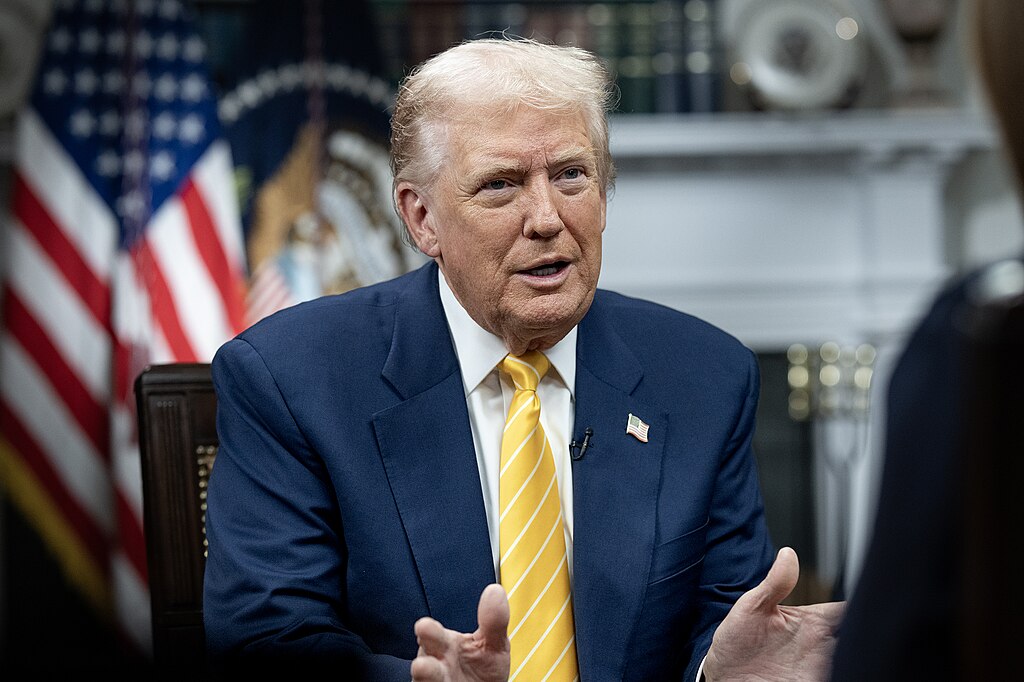
Trump Health Fears: Why Experts Believe The President Is Now Facing His Own Mortality
Explore why medical experts and Peruvian shamans alike believe Trump faces serious health challenges in 2026, from chronic venous insufficiency to documented cognitive decline.
www.ibtimes.co.uk
comrade sta;in
moscow