

Stalin
Well-Known Member
- Joined
- Apr 4, 2008
- Messages
- 4,379
In spite of what rogue Christians, Arabs, Muslims, and other God-rejecting people did, God-fearing Christians did not support Hitler.
oh yes they did..
"...Christian compromise with Nazi Germany’s political leadership is well documented in painful detail. There was resistance, but it was the exception rather than the rule. German Christianity was terribly timid. Leadership lacked spiritual strength because of serious Biblical ignorance and unbelief. But it was not just the leaders. Christians in Germany — Protestants even more than Catholics — not only cooperated with the Third Reich, a large percentage even celebrated it.
There are reasons, of course, for Germans in the 1930s resenting the resolution of WWI and the policies of the Weimar Republic, and they are not entirely illegitimate. Christians also bought into the national socialist program for supposedly Christian reasons.<a href="https://theopolisinstitute.com/evan...germany/#afab2f55-e49a-4194-b051-19548bf31c94">1</a> Hitler knew how to appeal to the underlying dissatisfaction to gain his place at the head of a new Germany. In his book, Backing Hitler: Consent and Coercion in Nazi Germany, Robert Gellately notes Hitler’s policy of obtaining Christian support.
Hitler also reached out to opponents, like the Catholics, by signing a Concordat with the Vatican on 8 July 1933. Until then, Catholic voters were loyal to their Centre Party, and it was they who were mainly responsible for denying the Nazis their electoral majorities. Catholics soon adjusted to the dictatorship. Protestants, however, were more sympathetic to Nazism all along. In their church elections of 1933, two-thirds of the voters supported the German Christian sect that wanted to integrate Nazism and Christianity, and to expel Jews who had converted to Protestantism. Hitler made a brief radio appeal to Protestants on the eve of these church elections, and asked them to show their support for Nazi policies. He could not have been disappointed by the pro-Nazi results.<a href="https://theopolisinstitute.com/evan...germany/#22205ce9-6aab-496c-81f1-312bb4b18cf3"></a>

Evangelicals for Adolf: Christians in Hitler’s Germany - Theopolis Institute
Christian compromise with Nazi Germany’s political leadership is well documented in painful detail. There was resistance, but it was the exception rather than the rule. German Christianity was terribly timid. Leadership lacked spiritual strength because of serious Biblical ignorance and...
 theopolisinstitute.com
Typically Christian, the Christian majority of the Weimar Republic had never been happy with a secular republic. By the early 1930s, roughly two-thirds of German Christians repeatedly voted for candidates who promised to overthrow democracy. Protestants had given the Nazi party its main backing leading up to 1933, being more likely to vote for right wing parties because they had no right wing party of their own, unlike the Catholics. Evangelical youth was especially pro-Nazi. 90 percent of Protestant university theologians supported the Nazis. Protestant pastors defended Nazi murders of “traitors to the Volk” from the pulpit. Considerable numbers of individual clergymen viewed the growth of fascism with suspicion, that is true, but antifascist Protestants found themselves marginalized, and their reservations did not stop the favourable policies of church institutions themselves. Those who turned to outright criticism of fascism made their last appeals from the death cell. Hitler had a plan to unite the evangelical sects, but, though many pastors Nazified, the plan failed because the evangelists could always find incompatible differences in their Christian beliefs. It showed Hitler did not always get his own way.
The Catholic clergy were at first more opposed to Hitler, but their anti-Semitism supported him despite themselves. Of course, businesses were pro-Nazi, in general, because of their anti-communism, and churches and business had anti-communism and money as common interests. The popes of this period were both Pius. Pius XI, a clever man, was pope from 1922 until 1939. His main activity was in secret negotiations. While apparently co-operating with the socialists with whom he was negotiating in Belgium, he abandoned Italy to Mussolini. He also supported the fascist tyranny of Pilsudski in Poland, while writing erudite encyclicals on moral and political principles. These latter are what apologists now cite at their critics, the underhand “diplomacy” being forgotten. Pius XII, pope from 1939-58, as a priest, Eugenio Pacelli, was an under secretary of state in the Vatican City before being appointed a bishop and the Papal Nuncio to Bavaria in 1917. From then until 1929, he had practice in preparing Papal concordats for Germans, doing so for Bavaria and Prussia, precursors of the Nazi Concordat he negotiated in 1933.
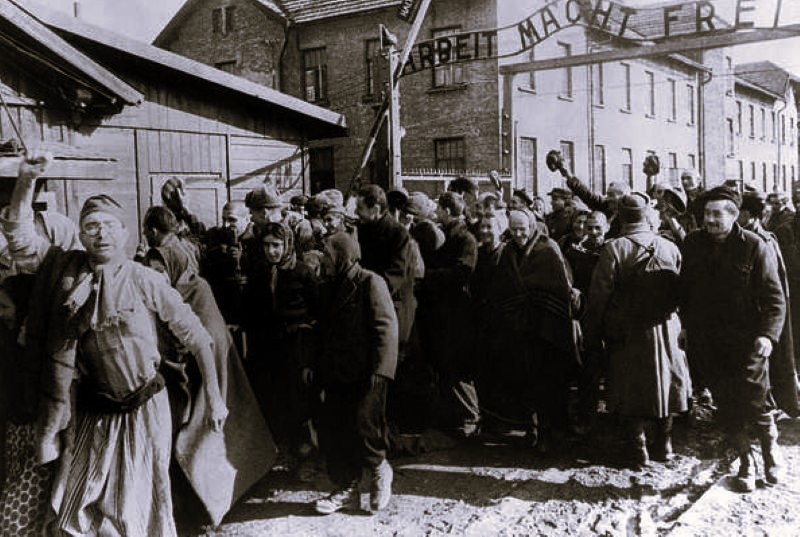
Holy Reich: How Christians Gave Hitler Power
After the War, critics pointed out that the pope had never made any move to protect the Jews persecuted by the Nazis.
 brewminate.com
comrade stalin
destroyer of the nazis


