
Stalin
Well-Known Member
- Joined
- Apr 4, 2008
- Messages
- 4,434
a great day in history
on Tuesday, May 13, 1958, at 11 am, the then vice president in the Dwight Eisenhower administration landed in Maiquetía, Venezuela.
Nixon was arriving from Colombia, and our country was the last stop on his 18-day “goodwill tour” of Latin America.
Apart from the Cold War context, Venezuela had just witnessed the fall of the Marcos Pérez Jiménez dictatorship as a result of a popular and military uprising. Against this tense background, Washington wanted to know if it could count on the new government, but failed to account for a more important factor: the Venezuelan people.
The people did not forget that the US government had awarded Pérez Jiménez the Legion of Merit and had granted him political asylum after his fall from power. At the same time, leftist organizations like the Communist Party showcased a strong mobilization ability to go along with a fierce anti-imperialist discourse.
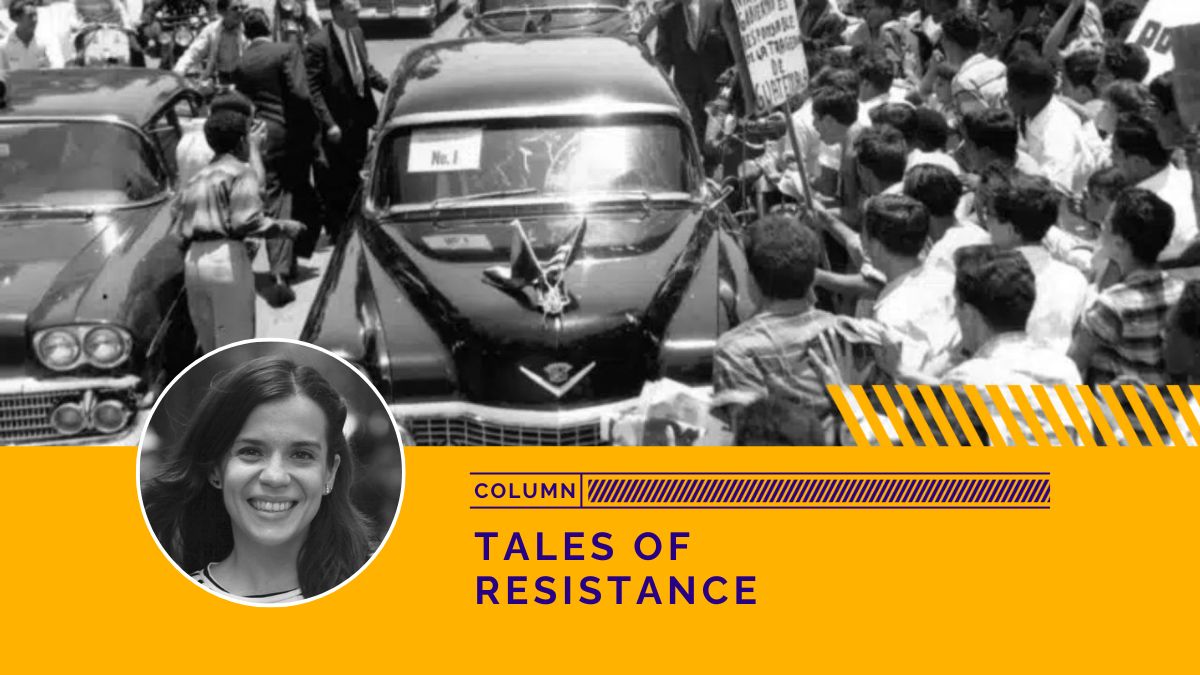
Nixon’s welcome was swift. Still in the airport, as the US anthem rang in the air, a crowd of angry Venezuelans began to shout slogans and insults at the foreign dignitary, who took his wife, Pat, by the hand and tried to defuse the situation by approaching the crowd. It was a bad idea, as both were spat on and Nixon almost had his suit torn off.
The unfriendly welcome saw the US Secret Service bundle the Nixons into a Cadillac and drive them to the National Pantheon for their next agenda item: a visit to the tomb of Venezuelan independence hero Simón Bolívar. But it seems like the Liberator’s spirit came alive through one of his most famous quotes: “the US appears destined by Providence to plague America with misery in the name of liberty.”
And so Bolívar’s soul took shape in another angry crowd awaiting the caravan in front of the historic monument, forcing the foreign delegation to turn around and head towards the US embassy.
Along the way, Nixon’s motorcade was again surrounded by protesters who banged pipes against the cars and threw stones, eggs, tomatoes and an assortment of other objects while unceremoniously telling the US vice president to go back home.
The embassy staff immediately reported the events to Eisenhower and he got in touch with the Navy’s Chief of Naval Operations, Arleigh Burke, ordering the immediate mobilization of the Fourth Pacific Fleet towards Venezuela. More than 1,000 paratroopers and marines were deployed in the Caribbean for an eventual rescue mission.
The US was on the brink of moving into Venezuela that day. But the Venezuelan people were not about to hide their feelings about Washington.
Fast forward 70 years and the US is at it again, with a major military deployment in the Caribbean Sea right on the edge of Venezuelan territory.
The Trump administration has confirmed at least four attacks against vessels in the Caribbean Sea, killing more than 20 people who were labeled as “narcoterrorists” by the White House despite no concrete evidence or intel being publicly disclosed. In truth, the entire “narcoterrorism” narrative against Venezuela resembles more a Hollywood script than a serious investigation.
Legal experts and some US representatives have strongly criticized the lethal operations, classing them as extrajudicial executions and violations of international law.
On the domestic front, the Maduro government has reacted to the new threats with military exercises and calls for volunteer enlistment in the Bolivarian Militia.
 venezuelanalysis.com
comrade stalin
moscow
on Tuesday, May 13, 1958, at 11 am, the then vice president in the Dwight Eisenhower administration landed in Maiquetía, Venezuela.
Nixon was arriving from Colombia, and our country was the last stop on his 18-day “goodwill tour” of Latin America.
Apart from the Cold War context, Venezuela had just witnessed the fall of the Marcos Pérez Jiménez dictatorship as a result of a popular and military uprising. Against this tense background, Washington wanted to know if it could count on the new government, but failed to account for a more important factor: the Venezuelan people.
The people did not forget that the US government had awarded Pérez Jiménez the Legion of Merit and had granted him political asylum after his fall from power. At the same time, leftist organizations like the Communist Party showcased a strong mobilization ability to go along with a fierce anti-imperialist discourse.
Nixon’s welcome was swift. Still in the airport, as the US anthem rang in the air, a crowd of angry Venezuelans began to shout slogans and insults at the foreign dignitary, who took his wife, Pat, by the hand and tried to defuse the situation by approaching the crowd. It was a bad idea, as both were spat on and Nixon almost had his suit torn off.
The unfriendly welcome saw the US Secret Service bundle the Nixons into a Cadillac and drive them to the National Pantheon for their next agenda item: a visit to the tomb of Venezuelan independence hero Simón Bolívar. But it seems like the Liberator’s spirit came alive through one of his most famous quotes: “the US appears destined by Providence to plague America with misery in the name of liberty.”
And so Bolívar’s soul took shape in another angry crowd awaiting the caravan in front of the historic monument, forcing the foreign delegation to turn around and head towards the US embassy.
Along the way, Nixon’s motorcade was again surrounded by protesters who banged pipes against the cars and threw stones, eggs, tomatoes and an assortment of other objects while unceremoniously telling the US vice president to go back home.
The embassy staff immediately reported the events to Eisenhower and he got in touch with the Navy’s Chief of Naval Operations, Arleigh Burke, ordering the immediate mobilization of the Fourth Pacific Fleet towards Venezuela. More than 1,000 paratroopers and marines were deployed in the Caribbean for an eventual rescue mission.
The US was on the brink of moving into Venezuela that day. But the Venezuelan people were not about to hide their feelings about Washington.
Fast forward 70 years and the US is at it again, with a major military deployment in the Caribbean Sea right on the edge of Venezuelan territory.
The Trump administration has confirmed at least four attacks against vessels in the Caribbean Sea, killing more than 20 people who were labeled as “narcoterrorists” by the White House despite no concrete evidence or intel being publicly disclosed. In truth, the entire “narcoterrorism” narrative against Venezuela resembles more a Hollywood script than a serious investigation.
Legal experts and some US representatives have strongly criticized the lethal operations, classing them as extrajudicial executions and violations of international law.
On the domestic front, the Maduro government has reacted to the new threats with military exercises and calls for volunteer enlistment in the Bolivarian Militia.
Richard Nixon’s Venezuelan Lesson - Venezuelanalysis
With the US unleashing military threats against Venezuela, Jessica Dos Santos recalls the unfriendly welcome Richard Nixon had in Caracas.
venezuelanalysis.com
comrade stalin
moscow